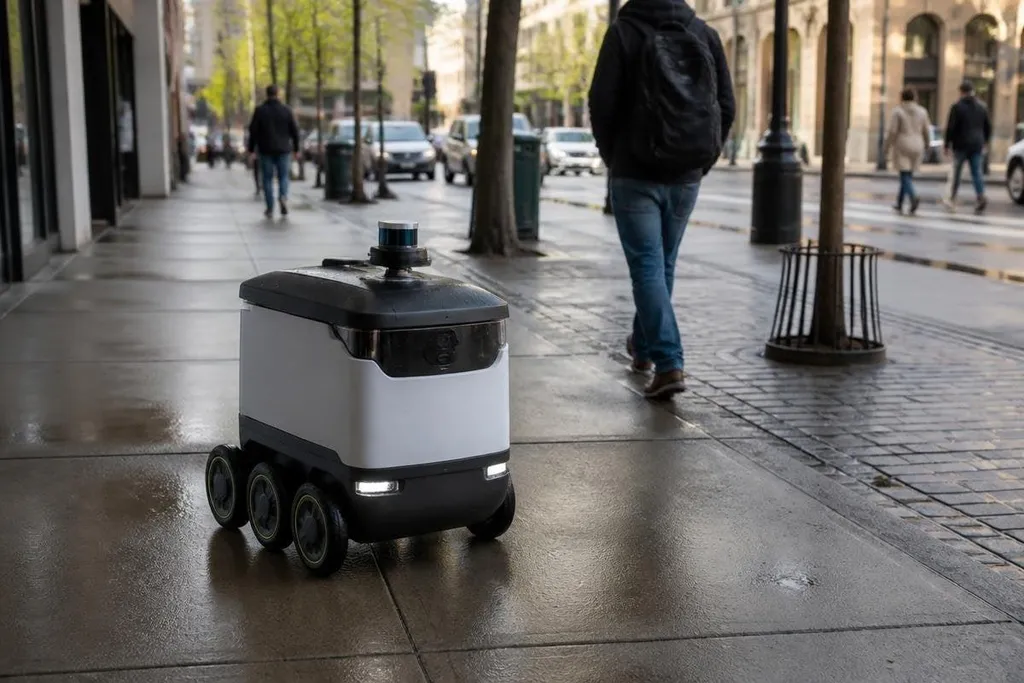
A city robot has to work around people, weather, traffic, and changing plans. That makes the job harder than a controlled factory task, where the floor, lighting, and route can stay fixed.
The next wave of smart city robots will be judged by useful work, safe behavior, and clear costs. A polished demo won't answer those questions.
Quick read
- Useful robots will start with one narrow city task.
- Remote operators will still matter when sensors or routes fail.
- City buyers need service records, safety plans, and a price per completed job.
Start with the job
Cities should name the task before they pick the robot. That task might involve checking a public asset, moving a small load, cleaning a defined area, or collecting data for a human team.
Each job needs its own payload, route, speed, runtime, and handoff rules. This order matters because a general-purpose robot can look useful while doing no single job well.
A machine that carries tools may need a different body, battery, and gripper from one that inspects road surfaces. The robot's shape follows the work.
The project also needs a clear result. “Inspect the site” is too loose for a contract. A better measure could be a set number of images, a completed route, or a report that a named department can check.
Smart means handling change
A smart city robot needs more than cameras and software. It has to spot people, bikes, cars, curbs, temporary barriers, and objects left in its route. It also needs a safe response when its sensors disagree or the map no longer matches the street.
That response may mean slowing down, stopping, asking a remote operator for help, or returning to a known safe point. The choice depends on the task and the risk around it. A delivery robot and an inspection robot should not use the same rules by default.
Remote control will remain part of the system for many jobs. A person can handle an unusual scene that the robot's onboard software cannot classify. That person needs a live view, a reliable connection, a record of each intervention, and a rule for when the robot must stop.
A city robot that needs remote help must record what happened, who took control, and how long the task stopped. A city team can use reports from Robot 24 to compare those records with claims from public trials and product demos. The next test is public space, where people, traffic, weather, and poor network coverage can change the job.
Public space changes the test
A robot in a public place affects people who never agreed to take part in a trial. City teams need to explain what the robot senses, how long data stays on the system, and who can access it. Those answers belong in the project plan before machines arrive on the street.
Noise, access, and appearance matter too. A robot that blocks a narrow path creates work for the city, even if its main task runs well. The same applies to a machine that needs a staff member nearby for every hour of operation.
The hard part is service. A city needs spare parts, charging plans, software updates, incident logs, and staff who can fix small faults. A low purchase price can lose its value if each failed mission needs a specialist visit.
What city buyers should ask for
Use this checklist before approving a pilot or purchase:
- Name the task: Write the exact job, route, output, and stop condition.
- Set the limits: Record payload, runtime, speed, weather rating, turning space, and noise level.
- Plan failure: State who takes control when the robot stops, loses its map, or meets an unexpected obstacle.
- Check the data: List each sensor, storage period, access group, and deletion process.
- Price the service: Count charging, staff time, repairs, software fees, spare parts, and transport.
- Set a pass mark: Choose the completion rate and safety record needed before wider use.
A pilot should answer those points with records from the actual route. A staged demonstration can show that a robot performs one action; it cannot show how often the full job succeeds across a working week.
What happens next
Cities will get better results by buying a defined service instead of a machine with a long feature list. I'd wait for proof from the route, the maintenance log, and the staff who handle failures before calling any robot ready for city-wide work.
The next useful milestone is simple: a public trial with a named task, a published pass mark, and enough operating data for another city to check the claim.